
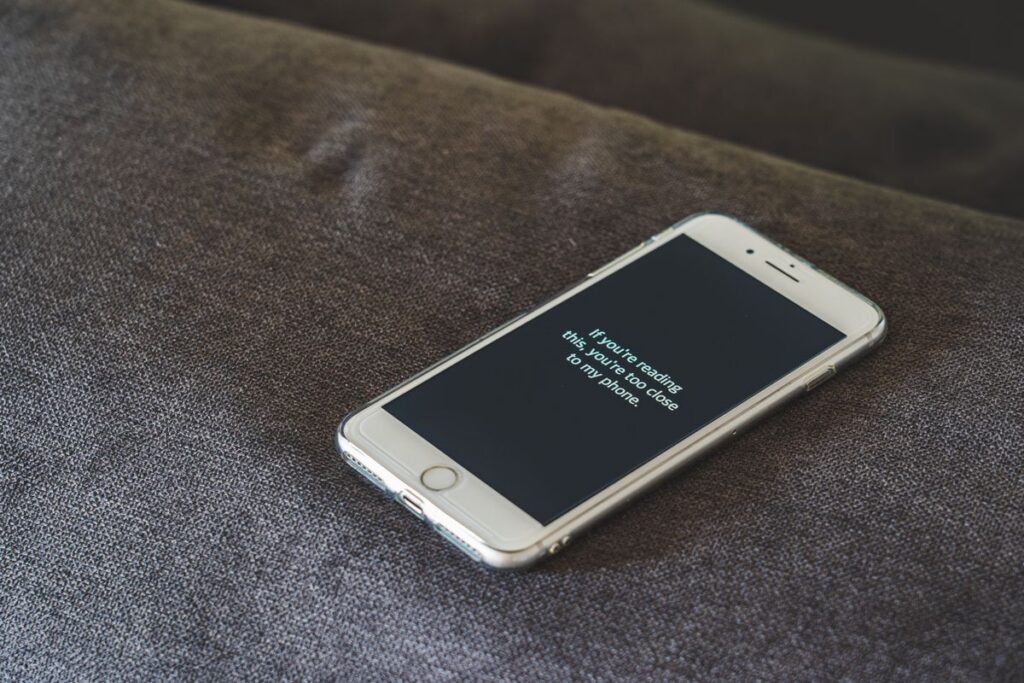
Your phone is with you more than any person, app, or website in your life. It knows where you slept last night, who you talked to this morning, and what you searched for at 2am. No single tracker or ad network comes close to that picture on its own — and on most phones, all of it sits under the control of one company.
That is not a reason to panic, and it is not a reason to give up your smartphone. It is a reason to ask a simple question: who actually holds the keys to the device that knows more about you than anyone else?
One Device, Every Detail
Think about what actually lives on a modern phone. Your location, tracked continuously. Every message you send, to everyone you know. Your photos, often going back years. Your contacts, your notes, your documents, your calendar. On a computer, this data is scattered across different accounts and apps. On a phone, it is consolidated in one place, managed by one operating system, and made available to whichever company built that operating system.
All of it is tied together by a single account — your Google Account or Apple ID — which links your phone to your email, your cloud backups, your purchase history, and often your other devices too. That account is the thread that turns everything the phone collects into one continuous profile, rather than a pile of separate, disconnected data points.
Two Companies, One Choice
In practice, that company is almost always Google or Apple. Their incentives are different. Google’s revenue comes primarily from advertising, so the data your phone generates feeds fairly directly into ad targeting. Apple makes most of its money from hardware and services, which gives it less reason to mine your data for advertisers — and it markets itself accordingly.
That distinction is real, and it matters. But it does not change the underlying structure: one corporation writes the operating system, controls the updates, and decides what the device can and cannot do — with no way for you to verify any of it yourself. Whether that company profits from your data directly or not, you are still trusting it completely.
Reclaiming The Operating System
There are several de-Googled Android alternatives out there. The two we have personally tested and actually use are GrapheneOS and Murena’s /e/OS — and Android’s openness is what makes an alternative possible at all, in a way iOS does not allow.
GrapheneOS strips out Google’s tracking at the OS level and adds hardening most phones never get — stronger memory protection, a smaller attack surface, and the ability to relock the bootloader with your own security keys. It is actively maintained, with security patches landing fast. The catch is hardware: it only runs on Google Pixel phones and the Pixel tablet.
Murena’s /e/OS takes a different path. It is also a de-Googled Android build, but it supports a far wider range of devices, and Murena sells phones with the OS already installed — no flashing required. That convenience comes with a trade-off: a lighter security model than GrapheneOS, and on most supported devices, no ability to relock the bootloader.
Neither option will make you invisible online. Cookies, browser fingerprinting, and simply being logged into an account can still identify you regardless of which operating system your phone runs. But both meaningfully shrink what a single company can see and do with your device — without asking you to give up a smartphone at all.
Key Takeaways
- Your phone holds a more complete picture of you than any single app or website — location, messages, photos, and contacts, all in one place.
- Your Google or Apple account ties all of that data together into a single, continuous profile linked across your other devices and services.
- Google’s ad-driven business model and Apple’s hardware-driven one lead to different data practices, but both still put one company in full control of your operating system.
- Several de-Googled Android options exist; GrapheneOS and Murena’s /e/OS are the two we have personally tested and use.
- GrapheneOS offers the strongest hardening and security but only runs on Google Pixel devices; Murena’s /e/OS supports far more hardware and ships preconfigured, trading some security for convenience.
Photo: Castorly Stock via Pexels